Blog

Can India experience heat waves beyond human survival?

India could experience heat waves beyond human survival limit, says World Bank report. And this impact would be felt in several ways. A look at the report in five brief points

1. HOTTEST ON RECORD: The World Bank report titled “Climate Investment Opportunities in India’s Cooling Sector” said that the country is experiencing higher temperatures that arrive earlier and stay far longer. “In April 2022, India was plunged into the grip of a punishing early spring heat wave that brought the country to a standstill, with temperatures in the capital. New Delhi, topping 46 degrees Celsius. The month of March, which witnessed extraordinary spikes in temperatures, was the hottest ever recorded,” said the report.

2. INTENSE HEAT WAVES: Predicting that heat waves situation in India could break the human survivability limit, the study noted that the recent heat wave supports what many climate scientists have long cautioned about with reference to rising temperatures across South Asia. It added that in August 2021, the Sixth Assessment Report of the Inter-governmental Panel on Climate Change (IPCC) warned that the Indian subcontinent would suffer more frequent and intense heat waves over the coming decade. The G20 Climate Risk Atlas also warned in 2021 that heat waves across India were likely to last 25 times longer by 2036-65 if carbon emissions remain high, as in the IPCC’s worst-case emission scenario.

3. IMPACT ON ECONOMY: The report warned that rising heat across India can jeopardise economic productivity. “Up to 75 per cent of India’s workforce, or 380 million people, depend on heat-exposed labor, at times working in potentially life-threatening temperatures….By 2030, India may account for 34 million of the projected 80 million global job losses from heat stress associated productivity decline,” the report stated.

4. HEAT AND COLD CHAINS: Transporting food and pharmaceutical goods across India requires a system of cold chain refrigeration that works every step of the way. “A single temperature lapse in the journey can break the cold chain, spoiling fresh produce and weakening the potency of vaccines. With only 4 per cent of fresh produce in India covered by cold chain facilities, annual estimated food losses total USD 13 billion,” it said. It also observed that the third largest producer of pharmaceuticals in the world, pre-COVID-19, India lost approximately 20 per cent of temperature-sensitive medical products and 25 per cent of vaccines due to broken cold chains, leading to losses of USD 313 million a year.

5. THE POOR ARE VULNERABLE: According to analysis presented in the India Cooling Action Plan (ICAP), only eight per cent of Indian households own air-conditioning units. “Indoor and electric fans can help to maintain thermal comfort, but these too are expensive to buy and inefficient. As a result, many poor and marginalised communities across India are more vulnerable to extreme heat, living in inadequately ventilated, hot and crowded homes without proper access to cooling,” the report warned.

Picture Credit: Google

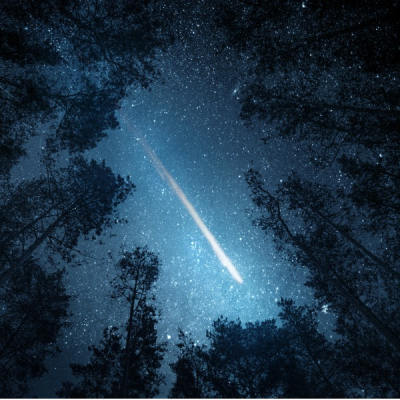
What is the streak of light that shoots across the night sky called?

During Earth’s journey around the Sun, there are times when its orbit crosses the orbit of a comet. It is when the planet moves through the comet debris trail that we witness meteor showers. The showers are named after the star or constellation which is close to where the meteors appear to radiate in the sky.

All of us may have seen streaks of light zip through the sky. We call them shooting stars and we also wish upon them. Well, what are these shooting stars? What are these streams of light? Consider the objects in space. These are lumps of rock or objects in space with sizes ranging from grains to small asteroids. A small piece of a comet or asteroid is called a meteoroid.

Meteoroid

These meteoroids can be considered as space rocks. They orbit the sun and when they enter Earth’s atmosphere at a high speed, they burn because of frictional heating, causing the light. These rays of light are referred to as meteors.

When many meteors appear at once, we call it a meteor shower. During a meteor shower, a number of meteors can be seen radiating or originating from a point in the night sky.

But where do these meteoroids come from? How does Earth come across these? During Earth’s journey around the Sun, there are times when its orbit crosses the orbit of a comet. It is when the planet moves through the comet debris trail that we witness meteor showers.

The meteor showers are named after the star or constellation which is close to where the meteors appear to radiate in the sky. The Perseids meteor shower is the most famous meteor shower and they peak around August 12 every year. Other notable meteor showers include the Leonids, Aquarids and Orionids and Taurids.

Now what happens when meteoroid survives the journey through the Earth’s atmosphere and hits the ground? In that case, it becomes a meteorite.

Did you know that more than 50,000 meteorites have been found on Earth?

picture Credit : Google

Why medicinal plants are disappearing?

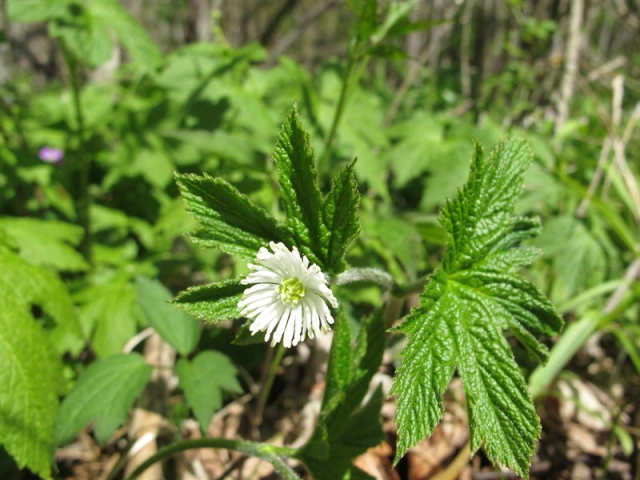
The history of medicine can be traced to prehistoric times. Among the earliest sources of medicines were herbs and various plant parts such as roots, flowers, etc. Across several regions of the world, medicinal plants are in use even today. In fact, research seems to suggest that the demand for these plants could be increasing with people wanting to embrace what are seen as “natural” remedies for ailments. But, how are the populations of medicinal plants faring? Come, let’s find out.

According to the World Health Organisation (WHO), “between 65% and 80% of the populations of developing countries currently use medicinal plants as remedies”. Apparently, among the few lakh plant species in the world today, “only 15% have been evaluated to determine their pharmacological potential” So, researchers are at work for “demonstrating the efficacy and importance of medicinal plants”. But the truth is that medicinal plants across the globe are facing extinction. An expert has said that “Earth is losing one potential medicinal plant every two years at an extinction rate that is hundred times faster than the natural process.” The situation is no different in our country.

India is among the many countries with known use of medicinal plants. Our country is home to nearly 45,000 plant species, and at least 7,000 of them are medicinal aromatic plants. However, a recent piece of news from experts has become a cause for concern- as much as 10% of 900 major medicinal plant species found in the country fall under the “threatened” category, and “are facing the threat of extinction” What is causing this? The usual suspects – overexploitation, habitat destruction, urbanisation, etc. Another worrisome aspect is that “only 15 per cent of medicinal plants are cultivated while the remaining 85 per cent are collected by the industry from forest ecosystems and other natural habitats”

Conservation strategies such as “field studies, proper documentation, mitigation measures, enactment of special laws…” and recovery programmes are suggested to save the medicinal plants. This is vital because such plants play a crucial role not just in traditional practices but also in treating illnesses such as cancer. It is important to note that “cancer has a long history of depending on natural products for drugs” When medicinal plants disappear, along with them could disappear several chances to better human life.

Picture Credit : Google

What is the Attari-Wagah retreat ceremony?

Do you know that booking for witnessing the Attari-Wagah retreat ceremony on India-Pakistan international border goes online?

If you have been following the news, you might have read that booking for the Attari-Wagah retreat ceremony can be made online. The online booking facility opens on Jan 1, 2023. What is this ceremony and when can it be watched? Let’s find out.

A daily ceremony

The Attari-Wagah front is along the India-Pakistan international border in Punjab. The Attari-Wagah retreat ceremony the daily national flag lowering and retreat ceremony taking place along the border. It is open for viewing by visitors. Symbolising rivalry as well as brotherhood and cooperation between the two nations, the purpose of the Attari-Wagah retreat ceremony is to formally close the gate at the border for the night. The Border Security Force (BSF) that guards the frontier conducts the event. The Attari border front, also called the joint check post or JCP, is located about 26 km from Amritsar city, and hundreds of domestic visitors and foreign tourists watch the daily ceremony conducted in a synchronised manner by smartly-dressed BSF personnel along with their counterparts, the Pakistan Rangers, on their side known as Wagah.

The background

India and Pakistan have been traditionally hosting the evening flag-lowering ceremony on the Attari-Wagah border since 1959 and the event is attended by people from both the countries on their respective sides. The ceremony which starts between 3.30 and 4 every evening lasts 60-120 minutes. The synchronised ceremony involves lowering of the flags of the two countries, foot stomping manoeuvres of the troops and loud shouts with patriotic songs being played in the background on either side. The ceremony ends with a retreat after a brief handshake between the soldiers on both sides.

Web portal launched

At present, people reach the retreat area without prior booking and the BSF allows them to take seats in the gallery on producing an ID card. A web portal for people desiring to witness the joint retreat le ceremony in person – http://attari.bsf.gov.in – has been launched by the BSF.

Online booking can be made from January 1 onwards. The new facility is not chargeable and visitors will be initially allowed to book 12 persons in one group, 48 hours prior to the desired day, after furnishing photo ID card details online. The booking details will be sent through an SMS to the mobile number of the group leader or the first visitor listed.

The BSF has now numbered the seats in the viewing gallery so that it can hold about 20,000-25,000 visitors daily. The online booking will also allow the tourists to visit the BSF museum and border pillar No. 102 that is erected next to the Attari border gate.

Picture Credit : Google

Why did UTC replace Greenwich Mean Time?

The Coordinated Universal Time (UTC) replaced the Greenwich Mean Time (GMT) as the world standard of time on January 1, 1972. For 50 years now, UTC has been the standard that is used to set all time zones around the globe.

Time is now an integral part of our lives every day. We wake up at a particular time, go to schools or offices at a set time, have our classes or meetings scheduled to take place at a given time… there is an endless list like this. Every aspect of life is now driven by time.

It wasn’t always like this though. Until some centuries ago, there wasn’t any need to measure time as accurately as we do today. There was basically daytime and nighttime in all the different places on Earth as the sun, moon, and the stars dictated time. But then, as the world grew smaller, and more connected with increasingly better technology, things changed.

Need for standardisation       

When rail and shipping lines started connecting the world, economic activity started requiring standardised timetables to coordinate activities. The idea for a universal time stemmed from this requirement and it was first conceived late in the 1800s.

A way to synchronise clocks across the world was first discussed in 1884 by the members who met at the International Meridian Conference in Washington D.C. While latitudes running east to west had always been measured from the equator, there was no such consensus around longitudes, or lines running north to south around our planet.

The prime meridian

It was at this conference that delegates from 25 countries chose to set the prime meridian or the zero point for longitude lines as that which passes through Greenwich, England. Time standards and time zones were built around this line, and hence came to be known as Greenwich Mean Time (GMT).

The advent of the atomic clocks after World War II enabled time to be measured with astounding accuracy in the second half of the 20th Century. These atomic clocks were able to show that Earth’s rotational period actually varied ever so slightly on an everyday basis, owing to tectonic movements, melting ice sheets, and natural oscillations in our planet’s movements.

Atomic time vs solar time

The idea behind Coordinated Universal Time or UTC (though it wasn’t yet known by that name) was thus born in the 1960s. It was a way to accommodate the differences in timekeeping that arise between atomic time and solar time. While atomic time refers to the time derived from atomic clocks and is hence extremely accurate, solar time is the time arrived at using astronomical measurements of the rotation of the Earth on its axis relative to the sun, and is hence, variable. UTC is not only kept within an exact number of seconds of International Atomic Time (TAI), but is also kept within 0.9 second of solar time or astronomical time, denoted as UT1.

Result of a compromise

UTC started being used in the 1960s, but it wasn’t until January 1, 1972 that it became the world standard for time, serving as the international basis of civil time as well as scientific time. This meant that UTC had effectively become the successor of GMT, providing for the basis of time worldwide. In case you are wondering how Coordinated Universal Time is abbreviated to UTC, then you will be pleased to learn that it is the result of a compromise. The acronym is a compromise between English and French speakers. While the English name for it, Coordinated Universal Time, would normally be abbreviated as CUT, the French name for it, Temps Universel Coordonne, would have been TUC. Instead of having it as CUT or TUC, a compromise was reached, and the acronym UTC was born.

Every time zone in the world is now given in terms of UTC. The Indian Standard Time (IST), for instance, is UTC+5:30. This means that IST is 5 hours and 30 minutes ahead of UTC. Irrespective of where you are on Earth, the time in that region can be given in terms of UTC.

Picture Credit : Google

What is an anthology?

It is a collection of literary works published earlier and has a compiler or an editor who puts them together for republication, often with his/her introduction or foreword and comments. It is an invaluable source to discover a range of writers and a repertoire of their works.

Our English teacher, the other day mentioned that anthologies of any kind are an invaluable source to discover a range of writers and a repertoire of their works, often found to be more useful than a book containing a single work of a single author. For some strange reason, not many readers engage with them. They are of varied kinds such as anthology of poems, short stories, plays, novels, and essays anthology of one writer’s works, anthology of theme-based writings, viz. love poems, protest plays anthology of period-based publications, that is, 18th-Century writings modern poetry, post-modem criticisms, and so on. She explained that an anthology is a collection of literary works published earlier and has a compiler or an editor who puts them together for republication, often with his/ her introduction/forward and comments.

The benefit of referring to an anthology is that in just one volume one could access many writers and their representative works. I had seen many anthologies on the shelves but never paid much attention to them. Having been inspired by what my teacher said, 1 wanted to glance through some when I stumbled upon an anthology of essays titled Greatest Essays, I was surprised to find about 50 essays in one book representing almost the same number of essayists from England and America. stretching from the 16th to 20th Centuries. I was surprised by the vast time span.

When I quickly ran my eyes over the table of contents. Some of the titles instantly appealed to me so I decided to read through at least a few. One such was Jonathan Swift’s A Meditation upon a Broomstick. As I found the title unusual and ran only about one-and-a-half page. I read it first I was struck by Swifts comparison of man with a broomstick both look good and clean to start with but finally they are thrown out in the garbage or in the fire to be burnt. Man, in the end, seems to be of no more value than a broomstick.

Another title that interested me was Gifts by Ralph Waldo Emerson because we live at a time when the practice of giving and receiving gifts is an integral part of our nature Emerson has a strikingly different viewpoint on gifts a true gift is a portion of thyself: he considers. Therefore the poet brings his poet the shepherd, his lamb; the farmer, com; the miner, a gem: the sailor, coral and shells the painter, his picture. He dismisses rings and other jewels merely as apologies for gifts, but values flowers and fruits as fitting presents. Also, he devalues the practice of choosing gifts from readymade shops, because, to him, they are cold, detached, and impersonal in nature. His views apparently run contrary to the ones during his time and the current practices as well.

I have heard a lot about the Niagara Falls, so when I 1 came across an essay on it by Rupert Brooke, I was motivated to read it. His poetic description of the falls was very impressive, focusing on every minute detail such as the fast flow of water, mass of water, spray, waves, mist, color, foam, rainbow, and so on. He is upset that the beauty of the river is surrounded by every ‘distraction, incongruity, and vulgarity, namely, the hotels, trams, stalls, booths, picture post-cards, and so on.

In less than an hour thus I was able to read three different writers on three different aspects with three different styles. The thought that dawned on me, then was that writers often deal with even commonplace things such as gifts broomstick, and waterfalls but what matters most to become a writer is the ability to generate thoughts based on ordinary things and express them imaginatively. I realised that writing need not necessarily be on some obscure profound ideas always. This is in fact motivated me to try my hand at writing sometime soon.

Importantly, anthologies lend themselves to random reading and one hardly needs to read cover to cover: one could pick and choose whatever interests and discard the rest, as I did. As anthologies often consist of renowned authors and their representative writings, the benefits readers reap are immense as they offer a wide variety of themes and styles.

Picture Credit : Google

Is a vegan the same as a vegetarian?

Veganism is a more austere form of vegetarianism. A vegetarian sticks to a plant-based diet and abstains from eating meat. A vegan goes a step further and excludes all animal products from his diet, including eggs, dairy products, honey, gelatin, lard, etc

Soybeans in the form of soy milk and tofu constitute the staple diet of vegans they are considered a complete protein. Cow’s milk is substituted by coconut or almond milk. Vegans also consume nuts, grains and pulses.

The term vegan was coined in 1944 by Donald Watson when he co-founded the Vegan Society in England. He intended the word to represent the ‘the beginning and end of vegetarian’.

Ethical vegans extend the philosophy to their daily lives avoiding any form of animal products for any other purpose. Veganism became popular in the 2000s as vegan food became more easily available in supermarkets.

Picture Credit : Google

What is a speech generating device?

An electronic device, it is of great use to those with difficulty in speaking. How does it work?

A speech generating device (SGD) is an electronic device that creates speech for those who have difficulty in speaking. Most SGDS are connected to a keyboard, eye sensor or other such keyboard input device that allows the user to select the words to be spoken. The user can enter words or phrases with or use a visual display with images to produce speech.

Digitally recorded human voices speaking actual words are stored in the device and played back upon selection. A variety of voices to match a users gender and age are available. Some SGDS also use computer generated speech similar to the ones used in automated telephone systems.

SGDS have certain advantages over sign boards or other communication methods. It enables a person with speech impairment to communicate through spoken words.

This means the user can easily draw the attention of someone at a distance or sitting in another room or even talk on the phone! SGDS are very effective for autistic children with limited speech ability. World renowned scientist Stephen Hawking used speech generating devices for years. He used to prepare his lectures at the Cambridge University in advance and deliver them using the SGD.

Picture Credit : Google

Who pollinated the world’s first flowers?

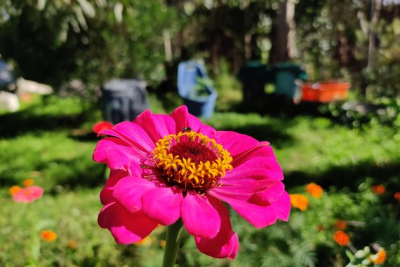
The first flowering plants in our world evolved only about 140 million years ago, and plants existed without flowers for a long time before that. And what we think of flowering plants it is hard not to think of pollinators. From insects and birds to animals and even wind and water, there’s a long list of pollinators. But among these who pollinated the first flowers? Researchers may have decoded that today nearly 90% of all plant species bear flowers. Most of these rely heavily on insects for pollination because they are effective due to their small size and high mobility in fact flowers have evolved to attract insects, and in return for pollination, gift them with nectar, pollen etc. Making there is a mutually beneficial relationship. A recent research studied more than 1.100 species of plants, and based on when they evolved, it mapped what pollinates a plant in the present to what might have pollinated the ancestor of that plant in the past it showed that insect pollination has been the most common, happening nearly 86% of the time, pointing to the fact that “the first flowers were most likely pollinated by insects Recent research on fossil insects suggests that a few insects may have actually been “pollinating plants even before the first flowers evolved

While it is easy to imagine bees to be the first to pollinate flowers, it is not so because bees did not evolve until after the first flowers Also, since the first flowers were small, they were most likely pollinated by a tiny creature, perhaps a fly or a beetle or some other insect that has long disappeared.

Did you know?

Pollination by vertebrate animals such as birds and bats, small mammals, and even lizards, has evolved at least 39 times- and reverted to insect pollination at least 26 of those times.
Wind pollination has evolved even more often: 42 instances these plants rarely go back to insect pollination.
Wind pollination evolved more often in open habitats at higher latitudes. Animal pollination is more common in closed-canopy rainforests, near the Equator.

Picture Credit : Google