Blog

When Abdul Kalam failed?

Dr. APJ Abdul Kalam would rarely finish a speech without a quote about failure. “F.A.I.L. stands for the First Attempt In Learning,” he would recite to cheering crowds of students. He has talked about dealing with failure in multiple interviews, with personal anecdotes. He attributed his learning in this regard to his one-time boss and the Indian space legend, Satish Dhawan.

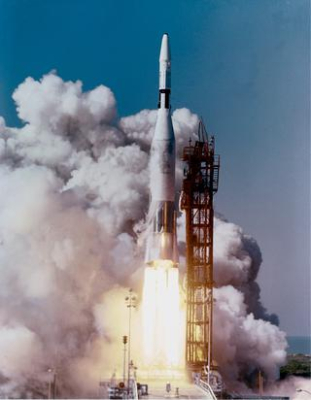
In an interview given in 2008, he narrates an experience from the 1970s. Dr. Kalam took over as the mission director for launching the Rohini series satellites in 1973. After working for six long years, the team – comprising hundreds of technical staff – prepared for the launch in 1979 at Sriharikota, Andhra Pradesh.

As the countdown rolled down, the system sent an alert about an impending component failure in the rocket system. “After consulting with my experts, I decided to bypass the system and proceed with a manual launch,” Dr. Kalam said in the 2008 interview. The launch failed.

“So many people had worked hard for years and instead of putting the satellite in orbit, the rocket went into the Bay of Bengal.” Dr. Kalam panicked about breaking this news to his superiors and the media. “National and international media were waiting eagerly at the launch base to hear updates from us. They wanted to know if we had succeeded,” he recalled in the interview.

“And then the great man came to me- Prof. Satish Dhawan, who was then the chairman of ISRO. He took me with him to the press conference. I was tired… our intense work over the past several months had failed. I knew how to handle success but I did not know how to handle failure,” he admits in the interview. The events that happened subsequently would leave a mark on Dr. Kalam for the rest of his life.

“I was really afraid of being blamed for the failure of the mission. After all, I was the mission director. But at the press conference, Prof. Dhawan took the blame on himself. He told the media, “Dear friends, we have failed today. But we will soon return with success.” He assured the media that within a year, the mission would be completed.” The team kept his word. The subsequent launch on July 18, 1980 was successful. The nation was jubilant, celebrating ISRO’s achievement. “But this time, Prof. Dhawan refused to accompany me to the press conference. He told me to handle it,” said Dr. Kalam. “That was the mark of a true leader. When we failed, he came to our rescue and supported us. He took the blame for failure. But when we succeeded, he shared the credit with the team.” The experience helped Dr. Kalam to face failures in future.


Picture Credit : Google

What is the importance of wet-bulb temperatures in a warming world?

The summer is here and the heat is upon us. Much of India experiences hot weather, exposing over a billion people to tough conditions. While you might be tracking the daily temperatures of your region that can be seen in weather forecasts, that might not be a fair reflection of the conditions.

The temperatures we see in weather forecasts are called air temperatures, also referred to as dry-bulb temperatures by meteorologists. Humidity, which plays a big role in how we experience heat, is not factored into air temperatures.

What is wet-bulb temperature?

Wet-bulb temperatures, on the other hand, combine the dry air temperature that we can see on a thermometer with humidity. It is for this reason that wet-bulb temperatures are a better measure of heat-stress conditions on humans in direct sunlight.

The name is a reflection of how this temperature is measured. When a wet cloth is slid over the bulb of a thermometer, the thermometer cools down due to water evaporating from the cloth. This lower temperature is the wet-bulb temperature and cannot go above air temperature.

The evaporating water cooling down the thermometer is akin to how our hodu temperature is lowered when we sweat. The sweating helps, however, only when the humidity in the surrounding air is low.

Sweating and humidity

If the humidity is high then it means that the air is already more saturated with water. As a result, less evaporation will occur and the wet-bulb temperature will be closer to the dry temperature. In such a scenario where the humidity is very high, sweating might not cool you as the sweat needs to evaporate off our skin for cooling to occur.

While it was long believed that a wet-bulb temperature of 35 degree Celsius was the maximum a human could endure for extended durations, a study in ?0?? suggested that it could he much lower – around 31 degree Celsius. With the world’s temperatures fast rising, extreme weather events, including heatwaves, are being encountered far more often in a warming world.

When the wet-bulb temperature in your region is high, it is important to take good care of yourself. If you are forced to be outside for a considerable length of time, then it is recommended that you wear a hat and lightweight, loose-fitting, light-coloured clothes. It goes without saying that you should try to take frequent breaks in areas with shade and keep yourself hydrated by taking plenty of fluids.

Picture Credit : Google

What is an underwater forest?

Imagine a forest underwater or a tapestry of green inside the ocean. That’s just what a kelp forest is. Though kelps are considered the forests of the sea and look like plants, they are not plants. Kelps are large brown algae, and together, the different species of kelps form kelp forests.

The kelp forests figure among one of the most dynamic and diverse ecosystems on earth and offer a habitat for marine organisms such as invertebrates, fishes, and other algae and play many key ecological roles.

Kelps cover 25% of the world’s coastlines. They provide food and shelter to marine animals. These can be seen around the world, across polar as well as temperate coastal oceans. They live in cold waters that are rich in nutrients.

While they remain attached to the seafloor, they grow towards the surface of the water and depend on sunlight to generate food. The ideal physical conditions are satisfied, then kelps can grow 45 cm a day. Some of these species are seen to measure up to even 45 m long.

Kelps and climate change

Kelp forests play a highly crucial role in battling climate change as they are good at sequestering carbon, thereby ensuring the health of the coastal environment. They are also capable of absorbing excess nitrogen and phosphorus that nun into the oceans from the land. Studies have shown that a third of the globe’s coastal environments depend on kelp to combat local pollution and sustain fisheries. Apart from helping maintain the health of the marine ecosystem, kelps are also commercially harvested as they find applications in food production, textiles, pharmaceuticals, and so on.

The health of the kelps is dependent largely on oceanographic conditions and as such they can disappear and reappear based on this. For instance, sea urchins can destroy the kelp forests. Moreover, strong individual storms can affect the kelp forests by tearing out the kelps from the floor of the sea.

These dense canopies of algae are also facing many threats. Water pollution, rising sea temperatures, overgrazing, overfishing, and water pollution are some of the reasons for the depletion of kelp forests.

Studies prove that Southern Australia and Northern Califonia have lost 95% of their kelp forests. Their depletion is seen along the coastlines of every continent and this affects the fish, livelihoods and economy that are supported by the kelp forests.

Picture Credit : Google

What’s space weather?

Ever wondered about the weather in space? Before that, let’s think about what dictates the weather on our planet. The Sun, which is our source of energy, plays a titular role in governing the weather on Earth. And so does it create the weather in space! The activities on the Sun’s surface can lead to a type of weather in space and this is called space weather.

Space weather is dependent on activities and changes on the Sun’s surface such as coronal mass ejections (eruptions of plasma and magnetic field structures) and solar flares (sudden bursts of radiation). We are shielded from these bursts of radiation and energy by Earth’s magnetosphere, ionosphere, and atmosphere.

Impact of space weather

The Sun is some 93 million miles away from our Earth. Yet, space weather can affect us and the solar system. The electric power distribution grids, global satellite communication, and navigation systems are all susceptible to conditions in space that are impacted by the Sun.

Space weather can damage satellites, affect astronauts and even cause blackouts on Earth. Such incidents are rare but they have happened before.

CME, solar flare

When a CME reaches Earth, it leads to a geomagnetic storm. This can disrupt services, damage power grids and cause blackouts.

For instance, back in 1989, a powerful geomagnetic storm led to a major power blackout in Canada. As a result, around 6 million people were left in the dark for about 9 hours.

Solar flares can also result in disruption of services. The strongest and most intense geomagnetic storm ever recorded occurred in 1859. This was caused by a solar flare. Called the “Carrington Event and named after England’s solar astronomer Richard Carrington who observed the activity through his telescope, the geomagnetic storm caused damage, disrupting the telegraph system on Earth. It also led to the aurorae, a result of geomagnetic activity, being visible in regions such as Cuba and Hawaii.

While telegraph networks are a thing of the past, our communications system and technologies can still be impacted by space weather. Even as most of the charged particles released by the Sun get shielded away due to Earth’s magnetic field, sometimes space weather can affect us. We need to track the activities on the Sun’s surface and understand them to protect the people and systems.

Any warning regarding bad space weather can help scientists send alerts and lessen the damage caused by it. Space agencies have observatories monitoring the Sun and detecting solar storms. These help in mitigating the effect of bad space weather.

Picture Credit :Google

Which is the longest song ever released?

Music has the power to take us on incredible journeys, transporting us to other worlds and allowing us to experience the full range of human emotions. From soaring anthems to introspective ballads, music has the ability to touch us in ways that nothing else can. And for some musicians, the journey is not limited to a few minutes or even hours – instead, they seek to create epic compositions that stretch on for days.

One such masterpiece is A Quantum Christmas Song, recognised by the Guinness Book of World Records as the longest officially released song. Created by English songwriter Mark Christopher Lee in collaboration with the British indie band The Pocket Gods, this 115-hour-45-minute long odyssey is a spiritual exploration of the mysteries of quantum physics and the meaning of life.

Some more examples of astonishingly long songs include Symphony of the Crown (48 hours, 39 minutes, and 35 seconds long) by Canadian artist Earthena; Rise and Fall of Bossnova (13 hours and 32 minutes) by American artist Michael J Bostwick; and Apparente Liberta (76 minutes and 47 seconds) by Italian musician Giancarlo Ferrari.

Picture Credit : Google

What is MRP?

MRP or maximum retail price is the price beyond which a packaged product cannot be sold to a consumer. The maximum price of any commodity in the packaged form includes all taxes local or otherwise, transport charges, and any other costs incurred by the manufacturer or seller.

The Centre regulates MRP to prevent retailers from overcharging customers. The Price Monitoring Division in the Department of Consumer Affairs is responsible for monitoring the prices of 22 essential commodities. It monitors the retail and wholesale prices of essential products on a daily basis.

Why was MRP launched?

The MRP was introduced in 1990 by the Department of Legal Metrology, Ministry of Civil Supplies by making an amendment to the Standards of Weights and Measures Act (Packaged Commodities Rules), 1976. It was meant to prevent tax evasion and protect consumers from profiteering by retailers.

Earlier, manufacturers had the freedom to print either the maximum retail price (inclusive of all taxes) or the retail price (local taxes extra). The latter method allowed the retailers to often charge more than the locally applicable taxes. The amendment mandated the compulsory printing of MRP on all packaged commodities.

Filing a complaint

If a shopkeeper charges more than the printed MRP, consumers can file a complaint with the Legal Metrology Department in the State where the shop is located. Besides, they can also file complaints at the Consumer Forum in their respective districts.

Selling a packaged product at a price higher than the printed MRP can attract a fine of Rs 25,000 or a jail term. India is the only country in the world to have a system wherein it is punishable by law to charge a price higher than the printed MRP.

However, hotels and restaurants are allowed to charge higher than the MRP of packaged food items. According to a Supreme Court ruling, restaurant and hotels are allowed to sell a packaged product at a higher cost as they provide extra services for their customers such as the ambience and cutlery, etc.

Meanwhile, the retailer is free to fluctuate the selling price as long as it is below or equal to the MRP.

Why are products at airports expensive?

The products at airports are expensive primarily because running a store at the airport is an expensive affair. Here, the retailers have to pay a high rent which is then added to the final price of the product. Another reason is that as airports are high-security zones, the workforce have to undergo daily background checks and training in security measures. This leads to a product price surge.

Picture Credit : Google

Is IFSC More than just a code?

In case someone enters an incorrect IFSC while making an online transfer, the funds are credited back to the sender’s bank account.

If you have a bank account, you must have seen an IFSC reference on the passbook. The unique code forms an essential part of the Indian banking infrastructure. Let us find out more about this unique code.

What is IFSC?

The Indian Financial System Code (IFSC) is an 11-character alphanumerical code that is used by banks to identify the branches where people have their bank accounts. Every bank branch has a unique IFSC and no two branches (even of the same bank) will ever have the same code. In an IFSC, the first four digits tell the name of the bank and the last six characters are numbers representing the branch. The fifth character is zero. The IFSC is assigned by the Reserve Bank of India (RBI).

Purpose of IFSC

The IFSC is used by electronic payment system applications such as Unified Payment Interfaces (UPI). It is used only to transfer or send funds within India. It is mandatory when transferring money from one bank account to another. Without the IFSC, you cannot make online transfers. The IFSC ensures that the money being transferred reaches the right destination bank without any mishap during the transaction process. It also helps the RBI keep track of all digital banking transactions.

Where to find the IFSC?

The IFSC of a bank’s branch can be found in the cheque book. Besides, it can be found on the first page of the passbook. Another simple way to find out the IFSC is to refer to the official website of the RBI or the bank’s website.

Picture Credit : Google

Making mendelevium, one atom at a time?

The discovery of mendelevium was announced at the end of April in 1955. It was described by one of its discoverers as “one of the most dramatic in the sequence of syntheses of transuranium elements”.

The search for new elements is something that scientists have been doing for hundreds of years. Once Russian chemist Dmitri Mendeleev organised the elements known at his time according to a repeating, or periodic (and hence the name periodic table), system in the 1860s, the search became a little easier.

This was because the gaps in Mendeleev’s periodic table pointed to elements that weren’t known yet. The properties of these elements, however, could be predicted based on their place in the table and the neighbours around them, thereby making it easier to discover new elements. Mendeleev’s table has since been expanded, to make space for other new elements

One of those new elements discovered was element number 101, named mendelevium after. Mendeleev. American Nobel Prize winner Glenn Seaborg, who was one of the discoverers of the element, wrote that the discovery of mendelevium was “one of the most dramatic in the sequence of syntheses of transuranium elements”, in a chapter co-written by him for The New Chemistry. Additionally, he also wrote in that chapter that “It was the first case in which a new element was produced and identified one atom at a time.”

Begins with a bang                                                                       

Ivy Mike, the first thermonuclear device, was dropped for testing on the Eniwetok Atoll in the Pacific Ocean in 1952, sending a radioactive cloud into the air, from which samples were collected. The lab reports suggested that two new elements-elements 99 (einsteinium) and 100 (fermium) – were discovered from the debris. The discoveries came at a time when there was a race to discover new elements.

 The leading researchers of the U.S. involved in this race were camped at the Radiation Laboratory at the University of California, Berkeley, under the direction of physicist Ernest Lawrence A team of scientists which included Albert Ghiorso, Stanley Thompson, Bernard Harvey, Gregory Choppin, and Seaborg, came up with a plan to produce element 101 using a billion atoms of einsteinium-253 that were formed in a reactor.

The idea was to spread the atoms of einsteinium onto a thin gold foil. As its half-life was about three weeks, the researchers effectively had a week to perform their experiments after receiving it. Based on Ghiorso’s calculations, they were aware that only about one atom of the new element 101 would be produced for every three hours the gold foil was bombarded with alpha particles.

Race against time

As the experiment would yield only a very small amount of the new element, the scientists set up a second gold foil behind the first to catch the atoms. It was a race against time as well as the half-life of element 101 was expected to be a few hours only.

With the Radiation Laboratory atop a hill and the cyclotron at its base, there really was a mad rush to get the samples to the lab on time. The samples “were collected in a test tube, which I took and then jumped in a car driven by Ghiorso”, is how Choppin put it in his own words.

On the night of the discovery, the target was irradiated in three-hour intervals for a total of nine hours. By 4 AM on February 19, 1955, they had recorded five decay events characteristic of element 101 and eight from element 100, fermium. With conclusive evidence of element 101’s existence, Choppin mentions that “We left Seaborg a note on the successful identification of Z =101 and went home to sleep on our success.”

At the end of April 1955, the discovery of element 101 was announced to the world. The university’s press release stated that “The atoms of the new element may have been the rarest units of matter that have existed on earth for nearly 5 billion years… The 17 atoms of the new element all decayed, of course, and the ‘new’ element is for the present extinct once again.”

Cold War era

As element 101 marked the beginning of the second hundred elements of the periodic table, the scientists wanted to name it after Mendeleev, the man behind the periodic table.

Despite the discovery happening during the Cold War era, Seaborg was able to pull enough strings to convince the U.S. government to accept the proposal to name the element after a Russian scientist. The International Union of Pure & Applied Chemistry approved the name mendelevium and the scientists published their discovery in the June 1955 issue of Physical Review Letters.

While only small quantities of mendelevium have ever been produced, more stable isotopes of the element have since been made. The most stable version known as of now has a half-life of over one-and-a-half months, allowing for better opportunities to further study heavy elements and their properties.

Picture Credit : Google

Are Membrane mirrors for large space-based telescopes?

Researches create lightweight flexible mirrors that can be rolled up during launch and reshaped precisely after deployment.

Mirrors are a significant part of telescopes. When it comes to space telescopes, which have complicated procedures for launching and deploying, the primary mirrors add considerable heft, contributing to packaging difficulties.

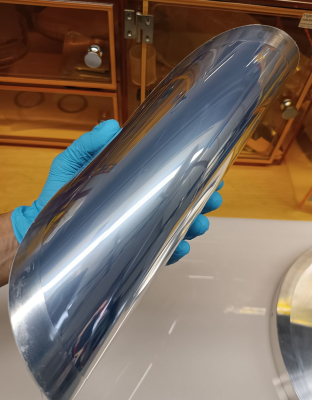
Researchers have now come up with a novel way of producing and shaping large, high-quality mirrors. These mirrors are not only thinner than the primary mirrors usually employed in space-based telescopes, but are also flexible enough to be rolled up and stored inside a launch vehicle.

Parabolic membrane mirror

The successful fabrication of such parabolic membrane mirror prototypes up to 30 cm in diameter have been reported in the Optica Publishing Group journal Applied Optics in April. Researchers not only believe that these mirrors could be scaled up to the sizes required in future space telescopes, but have also developed a heat-based method to correct imperfections that will occur during the unfolding process.

Using a chemical vapour deposition process that is commonly used to apply coatings (like the ones that make electronics water-resistant), a parabolic membrane mirror was created for the first time. The mirror was built with the optical qualities required for use in telescopes. A rotating container with a small amount of liquid was added to the inside of a vacuum chamber in order to create the exact shape necessary for a telescope mirror. The liquid forms a perfect parabolic shape onto which a polymer can grow during chemical vapour deposition, forming the mirror base. A reflective metal layer is applied to the top when the polymer is thick enough, and the liquid is then washed away.

Thermal technique

The researchers tested their technique by building a 30-cm-diameter membrane mirror in a vacuum deposition chamber. While the thin and lightweight mirror thus constructed can be folded during the trip to space, it would be nearly impossible to get it into perfect parabolic shape after unpacking. The researchers were able to show that their thermal radiative adaptive shaping method worked well to reshape the membrane mirror.

Future research is aimed at applying more sophisticated adaptive control to find out not only how well the final surface can be shaped, but also how much distortion can be tolerated initially. Additionally, there are also plans to create a metre-sized deposition chamber that would enable studying the surface structure along with packaging unfolding processes for a large-scale primary mirror.

Picture Credit : Google