Blog

What is a flash drought?

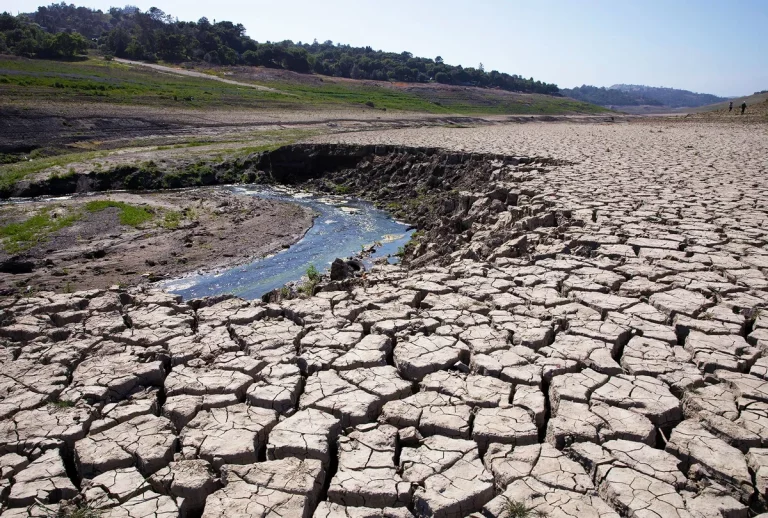
A flash drought is an extreme dry spell. Of late, it is becoming a big concern for farmers and water utilities in some countires, Flash droughts start and intensify quickly, over periods of weeks to months, compared to years or decades for conventional droughts. Still, they can cause substantial economic damage, since communities have less time to prepare for the impacts of a rapidly evolving drought.

Flash droughts also can increase wildfire risks, cause public water supply shortages and reduce stream flow, which harms fish and other aquatic life.

What causes them?

Flash droughts typically result from a combination of lower-than-normal precipitation and higher temperatures. Together, these factors reduce overall land surface moisture. Reduced moisture at the surface increases surface air temperatures, drying out the soil. Even moist regions can have flash droughts. In 2017, a flash drought in Montana and the Dakotas damaged crops and grasses that served as forage for cattle, causing U.S. $2.6 billion in agricultural losses.

Difficult to predict

Predicting flash drought events that occur on monthly to weekly time scales is much harder with current data and tools, largely due to the chaotic nature of weather and limitations in weather models. That’s why weather forecasters don’t typically make projections beyond 10 days there is a lot of variation in what can happen over longer time spans. And climate patterns can shift from year to year, adding to the challenge.

Early warnings

New monitoring tools that measure evaporative demand can, however, provide early warnings for regions experiencing abnormal conditions. Information from these systems can give farmers and utilities sufficient lead time to adjust their operations and minimise their risks.

The U.S. story

Flash droughts started receiving more attention in the U.S. after notable events in 2012, 2016 and 2017 that reduced crop yields and increased wildfire risks. In 2012, areas in the Midwest fell into severe drought conditions in June and July, causing more than $30 billion in damages. New England, typically one of the wetter U.S. regions too experienced a flash drought in the summer of 2022.

Picture Credit : Google 

When did Voyager 2 achieve its closest approach to Jupiter?

On July 9, 1979, Voyager 2 made its closest approach to the largest planet in our solar system. Now in interstellar space. Voyager 2 altered some of our ideas about the Jovian system.

The Voyager probes are: humanity’s longest running spacecraft as they have been flying since 1977 Both Voyager 2 and Voyager 1 are now in interstellar space, and though their power sources are gradually fading, they are still operational as of now.

It might seem counter-intuitive, but Voyager 2 was the first to be launched on August 20, 1977-about two weeks before the launch of Voyager 1. Both spacecraft were equipped with an extensive array of instruments to gather data. about the outer planets and their systems, in addition to carrying a slow-scan colour TV camera capable of taking images of the planets and their moons.

Based on Mariners

The design of the Voyagers was based on the Mariners and they were even known as Mariner 11 and Mariner 12 until March 7. 1977. It was NASA administrator James Fletcher who announced that the spacecraft would be renamed Younger. The Voyagers are powered by three plutonium dioxide radioisotope thermoelectric generators (RTGS) mounted at the end of a boom (a long metal beam extending from the spacecraft and serving as a structure subsystem).

Even though Voyager 1 was launched a little later, it reached Jupiter first in 1979 as it took a trajectory that put it on a faster path. Voyager 2 began transmitting images of Jupiter from April 24, 1979 for time-lapse movies of atmospheric circulation. For the next three-and-a-half months, until August 5 of that year, the probe continued to click images and collect data. A total of 17,000 images of Jupiter and its system were sent back to the Earth.

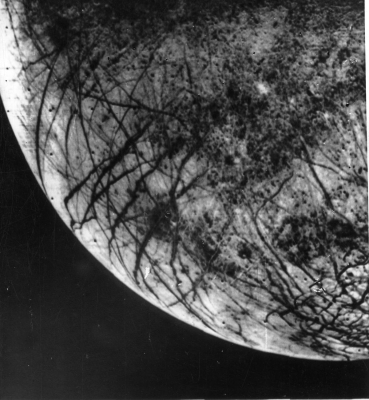
The spectacular images of the Jovian system included those of its moons Callisto, Europa, and Ganymede. While Voyager 2 flew by Callisto and Europa at about half the distance between the Earth and its moon, it made an even closer approach to Ganymede.

Ocean worlds

The combined cameras of the two Voyager probes, in fact. covered at least four-fifths of the surfaces of Ganymede and Callisto. This enabled the mapping out of these moons to a resolution of about 5 km.

Voyager 2’s work, along with observations made before and after, also helped scientists reveal that each of these moons were indeed an ocean world.

On July 9, 1979, the probe made its closest approach to Jupiter. Voyager 2 came within 6,45,000 km from the planet’s surface, less than twice the distance between Earth and its moon. It detected many significant atmospheric changes, including a drift in the Great Red Spot in addition to changes in its shape and colours.

Voyager 2 also relayed photographs of other moons like lo and Amalthea. It even discovered a Jovian satellite, later called Adrastea, and revealed a third component to the planet’s rings. The thin rings surrounding Jupiter, as had been seen by Voyager 1 as well, were confirmed by images looking back at the giant planet as the spacecraft departed for Saturn. As the probe used the gravity assist technique, Jupiter served as a springboard for Voyager 2 to get to Saturn.

Studies all four giant planets

 Four decades after its closest approach to Jupiter, Voyager 2 successfully fired up its trajectory correction manoeuvre thrusters on July 8, 2019. These thrusters, which had themselves last been used only in November 1989 during Voyager 2’s encounter with Neptune, will be used to control the pointing of the spacecraft in interstellar space.

In those 40 years, Voyager 2 had achieved flybys of Saturn (1981), Uranus (1986), and Neptune (1989), thereby becoming the only spacecraft to study all four giant planets of the solar system at close range. Having entered interstellar space on December 10, 2018, Voyager 2 is now over 132 AU (astronomical unit-distance between Earth and the sun) away from the Earth, still relaying back data from unexplored regions deep in space.

Picture Credit : Google

What type of lake is Crawford Lake?

Sediment deposited at Crawford Lake in Ontario, Canada, provides solid evidence that Earth entered a new human-driven geological chapter-the Anthropocene epoch- some seven decades ago, a team of scientists said recently. The members of the Anthropocene Working Group plan to submit the evidence to the international scientific body responsible for naming geological chapters in Earth’s history. The scientists conducted research at a dozen sites worldwide and cited Crawford Lake as the location that provided particularly persuasive geological markers that the Anthropocene epoch- essentially the age of humans – had arrived in the 1950s.

ANTHROPOCENE – – ETYMOLOGY

The word Anthropocene is derived from the Greek words “anthropo” for “man” and “cene” for “new”.

The idea of the Anthropocene was proposed at a science conference more than 20 years ago by the late Nobel Prize-winning chemist Paul Crutzen.

Teams of scientists have debated the issue since then and finally set up the working group to study whether it was needed and, if so, when the epoch would start and where it would be commemorated.

THE LAKE IN CANADA AND THE FINDINGS

From climate change to species loss and pollution, humans have etched their impact on Earth with such strength and permanence since the middle of the 20th century that a special team of scientists says a new geologic epoch began then. Called the Anthropocene, this epoch started sometime between 1950 and 1954, according to the scientists.

While there is evidence worldwide that captures the impact of burning fossil fuels, detonating nuclear weapons and dumping fertilizers and plastics on land and in waterways, the scientists are proposing a small but deep lake outside of Toronto, Canada – Crawford Lake to place a historic marker. “It’s quite clear that the scale of change has intensified unbelievably and that has to be human impact,” said University of Leicester geologist Colin Waters, who chaired the Anthropocene Working Group.

The  scientists aims to determine a specific start date of the Anthropocene by measuring plutonium levels at the bottom of Crawford Lake. The lake which is 79 ft deep and 258,333 sq ft in area was chosen over 11 other sites because the annual effects of human activity on the earth’s soil, atmosphere and biology are so clearly preserved in its layers of sediment. That includes everything from nuclear fallout to species-threatening pollution to steadily rising temperatures. There are distinct and multiple signals starting around 1950 in Crawford Lake – showing that “the effects of humans overwhelm the Earth system,” said Francine McCarthy, a committee member who specialises in that site as an Earth sciences professor at Brock University in Canada.

‘The remarkably preserved annual record of deposition in Crawford Lake is truly amazing,” said U.S. National Academies of Sciences President Marcia McNutt, who wasn’t part of the – committee. “If you know your Greek tragedies you know power, hubris, and tragedy go hand in hand,” said Harvard science historian Naomi Oreskes, a working group member. “If we don’t address the harmful aspects of human activities, most obviously disruptive climate change, we are headed for tragedy.”

DID YOU KNOW?

Geologists measure time in eons, eras, periods, epochs and ages.

The scientific working group is proposing that Anthropocene epoch followed the Holocene Epoch, which started about 11,700 years ago at the end of the Ice Age.

They are also proposing that it starts a new age, called Crawfordian after the lake chosen as its starting point.

* The reason geologists didn’t declare the Anthropocene the start of a bigger and more important time measurement, such as a period, is because the current Quaternary Period, which began nearly 2.6 million years ago, is based on permanent ice on Earth’s poles, which still exist. But in a few hundred years, if climate change continues and those disappear, it may be time to change that. AGENCIES

Picture Credit : Google

Is the color of the oceans changing?

The color of over 56 per cent of the worlits oceans larger than Earths total laut eganse, has changed significantly over the last two decades and human-caused dimate change is likely the driver, according to researchers

These colour changes, subtle to the human eye, cannot be explained by natural, year-to-year variability alone. Ocean colour, a literal reflection of the life and materials in its waters, in regions near the equator was found to have steadily turned greener over time, indicating changes in the ecosystems within the surface oceans.

The green colour of the ocean waters comes from the green pigment chlorophyll present in phytoplankton. the plant-like microbes abundant in upper ocean Scientists are, therefore, keen to monitor phytoplankton to see their response to climate change

The researchers from the Massachusetts Institute of Technology (MIT), US, and other institutes in their paper published in the joumal Nature, say that it would take 30 years of tracking chlorophyll changes before climate-change-driven trends would show, because natural, annual variations in chlorophyll would overwhelm those influenced by human activities.

In a 2019 paper, study co-author Stephanie Dutkiewicz and her colleagues showed that monitoring other ocean colours whose annual variations are much smaller than those of chlorophyll, would convey mom dear signals of climate-change-driven changes and that they might even be apparent in 20 years, rather than 30.

“It’s worth looking at the whole spectrum, rather than just trying to estimate one number from bits of the spectrum.” said lead author B. B. Cael of the National Oceanography Center. Cael and team then statistically analysed all the seven ocean colours recorded by satellite observations from 2002 to 2022 together.

To understand climate changes contribution to all these changes, he used Dutkiewicz’s 2019 model to simulate the Earth’s oceans under two scenarios-one with greenhouse gases and the other without them. The greenhouse gas model predicted changes to the colour of about 50 per cent of the world’s surface oceans in under 20 years close to Cael’s conclusions from his real-world satellite data analysis. “This trend is consistent with anthropogenic climate change”

Picture Credit: google

Do board games improve math skills?

We’ve intuitively known that most board games have a positive effect on us. Be it mental well-being, some form of learning, or even strategizing, board games contribute immensely. Given that they also help us stay away from our devices during the duration when we are playing the game, they are bound to become more popular in the future.

A new study has now validated part of what we’ve known intuitively, stating that board games based on numbers enhance mathematical ability among children. Their results, which is based on a comprehensive review of research published on this topic over the last 23 years, are published in the peer-reviewed journal Early Years in July.

19 studies from 2000

In order to investigate the effects of physical board games in promoting leaning, the researchers reviewed 19 studies published from 2000 onwards. These studies involved children under the age of 10 and all except one focused on the relationship between the board games and the mathematical skills of the players.

Children participating in these studies received special board game sessions led by teachers, therapists, or parents. While some of these board games were numbers-based like Snakes and Ladders and Monopoly, others did not focus on numeracy skills. These sessions were on average held twice a week for 20 minutes over two-and-a-half months.

Based on assessments on their mathematics performance before and after the intervention sessions, the studies came to their conclusions. Right from basic numeric competency like naming numbers and understanding their relationship with each other, to more complex tasks including addition and subtraction, mathematical ability received a boost in more than half the cases.

Beneficial for all learners?

 While the review established the positive effect of numbers-based board games for children, especially those young, it would be interesting to find out if such an approach would also be beneficial for all learners, including first-generation learners. By improving their fundamental understanding of numbers. children stand to gain as it helps ward off their fear of mathematics and numbers.

The study, meanwhile, also highlighted the lack of scientific evaluation to determine the impact of board games on the language and literacy areas of children. This research group plans to investigate this in their next project.

There is a need to design board games for educational purposes, both in terms of quantity and quality. The researchers believe that this is an interesting space that would open up in the coming years.

Picture Credit : Google 

What is the affect of light pollution on plants?

One of the less discussed types of pollution is light pollution of even less is the focus on how it affects plants since conversations on light pollution invariably revolve around humans, animals and migratory birds. So, how does it impact plants? Come, let’s find out. 

Most plants are dependent on natural light because it’s an important ingredient to prepare their food through the process called photosynthesis But they need light for more than just food. Just the humans, plants to have a circadian rhythm .  (This rhythm refers to the changes each living being experiences primarily with regard to light and dark) Continued exposure to artifical light during dark hours can cause health issues in humans. And its not vastly different for plants Plants too need a sleep cycle to process staff and what they do is they gust attention on different activities at different ties of the day so they need to know the time of day But when they come under the harsh brightness of streetlights and artifical lights from buildings and vehicles, it becomes difficult for them to understand if its daytime or nighttime. This affects how they live their life.

They continue to photosynthesise at night, which forces them to use their energy and puts enormous stress on them. They are already suffering the effects of climate change such as warmer winters and longer summers”. All of these factors alter their natural rhythm to disastrous results, such as change in flowering patterns. leaf-shedding patterns, etc. Any change in plant reproduction and growth pattern impacts all the wildlife such as insects and birds dependent on it. That’s not all Light pollution affecting plants could impact humans too.

Moths are usually active at night, and artificial lights attract moths in the process, taking them away from flowering plants Studies have shown that this reduces pollen transfer (and pollination) through moths. When the number of new plants growing this way declines it denies pollen to bees an important pollinator crucial for food crops. The end of pollination could mean the eventual collapse of global ecosystems.

 Picture Credit : Google

Who invented the ice cream cone?


Licking an ice cream off a cone is something that most children can’t say no to. Or even adults for that matter. One of the most delicious treats enjoyed across age groups, the origin of the cone that bears the ice cream is shrouded in mystery.

Over 2,000 years

Before we dive into the story of the cone, a little bit more about ice creams. Their origins can be traced back to over 2,000 years, but it is impossible to fix a specific date or an inventor. What we do know is that the likes of Alexander the Great (4th Century BCE) and Roman emperor Nero Claudius Caesar (1st Century CE) enjoyed these frozen treats in one form or another.

 When ice was mixed with salt, it was possible to lower and control the temperature of the mix of ingredients. This proved to be a major breakthrough in the creation of ice cream as we eat it today. While the invention of wooden bucket freezers with rotary paddles proved to be the next big thing for ice creams, their business truly became profitable and distributable when mechanical refrigeration made its way in the second half of the 19th Century.

It is believed that Menches conceived the idea of filling a pastry cone with scopps of ice cream on July, 23, 1904. According to the story on the Menches Bros. company website, Charles and Frank Menches invented the waffle cone.

It was early in the 20th Century that the cones made their way, revolutionising the way we consume ice creams. While there are many parallel claims as to who invented the ice cream cone, many accounts, including U.S.’ Library of Congress, credit American Charles E. Menches.

It is believed that Menches conceived the idea of filling a pastry cone with scoops of ice cream on July 23, 1904. According to the story on the Menches Bros. company website, cherles and Frank Menches invented the waffle cone.

St. Louis World’s Fair

Having baked waffles in Parisian waffle irons during 1904 St. Louis World’s Fair, they then thought of wrapping the warm waffle around a fid which is a cone-shaped splicing tool that is used for tent ropes. As the waffle held its shape after cooling, it proved to be an edible container for eating ice cream.

The Menches brothers began productions of these “premium” cones on returning home. They even launched their own business called Premium Ice Cream Cone and Candy Company in Akron, Ohio. Chales continued to work on improvements and even received a patent titled “Baking iron for ice-cream cones” on June &. 1909

Marchiony’s cups

Menches was neither the first, nor the last, to claim priority for inventing the ice cream cone. Italian-American immigrant Italo Marchiony received a patent on December 5, 1903 for a device that could make edible cups with handles. While these weren’t rolled up waffles that remain popular, they did improve business. Street-vending became a lot more efficient with these and for this reason, some consider it as the first cones.

Apart from Menches and Marchiony, Ernest Hamwi, Abe Doumar, Albert and Nick Kabbaz, Arnold Formachou, and David Avayou all lay claim to being the first one to invent the edible cone that is now a staple in the ice cream industry. Their stories range from a moment of inspiration to roll a waffle into a cone when a nearby vendor ran out of serving dishes; coming up with an ice cream sandwich in which ice cream, rather than meat, was filled into pastries rolled into a horn; and seeking inspiration from Western Asia and Europe, where pita bread, metal and paper cones were already being used to hold sweets and ice cream. Interestingly, most of these claimants either made or sold confections at the 1904 St. Louis World’s Fair.

While we might never quite be able to say for certain as to who among these actually invented the cone that we now hold in our hands while having an ice cream, the individuals involved collectively transformed the ice cream industry. As the cone ensures that both the product (ice cream) and the package (cone) are consumed together, it is also a win-win in other ways, as there is no waste left behind.

Picture Credit : Google 

What is the origin of barcode?


It has been 50 years since barcode, a series of parallel bars or lines of varying width printed on various products, was invented. Over the years, the barcode has transformed the way the retail industry functions globally. It is now used to speed supermarket checkout lines, parcel deliveries. Airline check in, etc.

Origin

The barcode was invented by Drexel University students Norman Joseph Woodland and Bernard Silver in 1948 and patented in 1952. However, the first barcode was drawn in sand in Miami Beach, U.S. by Woodland, decades before technology could bring his vision to life.

The incident that led to the invention of this technology was when a local food chain store owner in Philadelphia requested the dean of then Drexel Institute of Technology (now Drexel University) to come up with a way to get shoppers through the billing faster. Though the dean shrugged it off. Bernard Silver and Woodland teamed up to develop a solution.

The first barcode was called Bull’s Eye barcode, a series of concentric circles. It was a linear representation of Morse code, the well-known character-encoding scheme in telecommunications, defined by dots and dashes. However, the idea could not be developed into a system due to expensive laser and computing technology.

Later, US engineer George Laurer implemented Woodland’s idea using less expensive laser and computing technology. He developed a rectangular scanner with strips called the Universal Product Code.

On April 3, 1973 big retailers and food companies agreed to use barcode to identify products. On June 26 in 1974, the barcode technology was used for the first time in the US. State of Ohio to scan a pack of chewing gum. The gum is now in the National Museum of American History in Washington.

The original barcode carried an 11-digit formula-six identifying the manufacturer and five identifying the product a 12th digit was added later as a check.

How do they work?

The bars are black strips on a white background. Their width and numbers are, however, different on each product. The bars are used to represent the binary digits 0 and 1 sequences of which represent numbers from 0 to 9 and be processed by a digital computer. Barcodes display the printed 12-digit number typically underneath the product as a backup in case of possible complications.

Barcode scanners use an incandescent light bulb or laser to shine light through the barcode. While the black lines on the barcode absorb light, the white parts shine through and get reflected. While scanning a barcode, the amount of light is detected, which then gets translated into a set of digits or data. Information can be retrieved from a computer database using this data.

Problems

While barcodes have indeed revolutionised the way of registering and selling products, there are several problems as well. With barcodes, there is high probability of misreading the product due to misorientation, obstruction by dirt, mist, protrusions, and damage. Besides, the barcodes can be scanned only from a particular distance – one metre. Also, barcode scanners are delicate and expensive

It has been 50 years since barcode, a series of parallel bars or lines of varying width printed on various products, was invented. Over the years, the barcode has transformed the way the retail industry functions globally. It is now used to speed supermarket checkout lines, parcel deliveries. Airline check in, etc.

Origin

The barcode was invented by Drexel University students Norman Joseph Woodland and Bernard Silver in 1948 and patented in 1952. However, the first barcode was drawn in sand in Miami Beach, U.S. by Woodland, decades before technology could bring his vision to life.

The incident that led to the invention of this technology was when a local food chain store owner in Philadelphia requested the dean of then Drexel Institute of Technology (now Drexel University) to come up with a way to get shoppers through the billing faster. Though the dean shrugged it off. Bernard Silver and Woodland teamed up to develop a solution.

The first barcode was called Bull’s Eye barcode, a series of concentric circles. It was a linear representation of Morse code, the well-known character-encoding scheme in telecommunications, defined by dots and dashes. However, the idea could not be developed into a system due to expensive laser and computing technology.

Later, US engineer George Laurer implemented Woodland’s idea using less expensive laser and computing technology. He developed a rectangular scanner with strips called the Universal Product Code.

On April 3, 1973 big retailers and food companies agreed to use barcode to identify products. On June 26 in 1974, the barcode technology was used for the first time in the US. State of Ohio to scan a pack of chewing gum. The gum is now in the National Museum of American History in Washington.

The original barcode carried an 11-digit formula-six identifying the manufacturer and five identifying the product a 12th digit was added later as a check.

How do they work?

The bars are black strips on a white background. Their width and numbers are, however, different on each product. The bars are used to represent the binary digits 0 and 1 sequences of which represent numbers from 0 to 9 and be processed by a digital computer. Barcodes display the printed 12-digit number typically underneath the product as a backup in case of possible complications.

Barcode scanners use an incandescent light bulb or laser to shine light through the barcode. While the black lines on the barcode absorb light, the white parts shine through and get reflected. While scanning a barcode, the amount of light is detected, which then gets translated into a set of digits or data. Information can be retrieved from a computer database using this data.

Problems

While barcodes have indeed revolutionised the way of registering and selling products, there are several problems as well. With barcodes, there is high probability of misreading the product due to misorientation, obstruction by dirt, mist, protrusions, and damage. Besides, the barcodes can be scanned only from a particular distance – one metre. Also, barcode scanners are delicate and expensive.


Picture Credit : google

 

Where are the 7 mega textile parks in India?

Seven mega textile parks are set to come up in seven states in a major boost to the textile sector in the country

The Central Government recently announced the development of mega textile parks in seven States in the country under the PM MITRA scheme. But what is PM MITRA where are these parks going to come up, and what are these parks for? Let’s find out.

Global textile hub

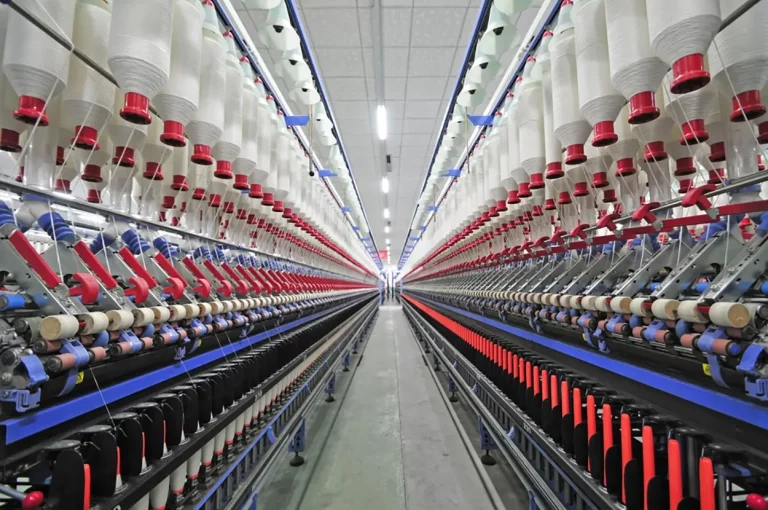
The “PM MITRA mega textile parks’ will be set up in Tamil Nadu, Telangana, Karnataka, Maharashtra, Gujarat, Madhya Pradesh, and Uttar Pradesh in the first phase. These textile parks aim to revolutionise the textile industry in India, contribute significantly to the country’s economic growth and eventually make the country a global hub for textile manufacturing and exports.

The proposed parks, which will have state-of-the-art infrastructure and an integrated value chain at each location, are expected to attract massive investments and create lakhs of jobs. These seven sites were chosen out of 18 proposals for PM MITRA parks which were received from 13 States. Eligible States and sites were evaluated using the ‘Challenge Method’ based on a set of criteria, including connectivity, existing ecosystem, textile/industry policy, infrastructure, and utility services.

Eco-friendly practices

The government aims to create a complete ecosystem for the textile industry in these parks, from raw material to finished products. The parks will promote sustainable development by incorporating eco-friendly practices in textile production such as use of emission-free renewable energy and adoption of best practices in water conservation and effluent treatment. The parks “represent a unique model where the Centre and State Governments will work together to increase investment, promote innovation and create job opportunities”.

Generate jobs

These parks are envisaged to enhance the competitiveness of the textiles industry and attract global players to manufacture in India. They are also expected to create employment opportunities for over 20 lakh people, attract an estimated Rs. 70,000 crore domestic and foreign investment, and boost exports.

Picture Credit : Google