
Category Islands

What kind of country is Kiribati?

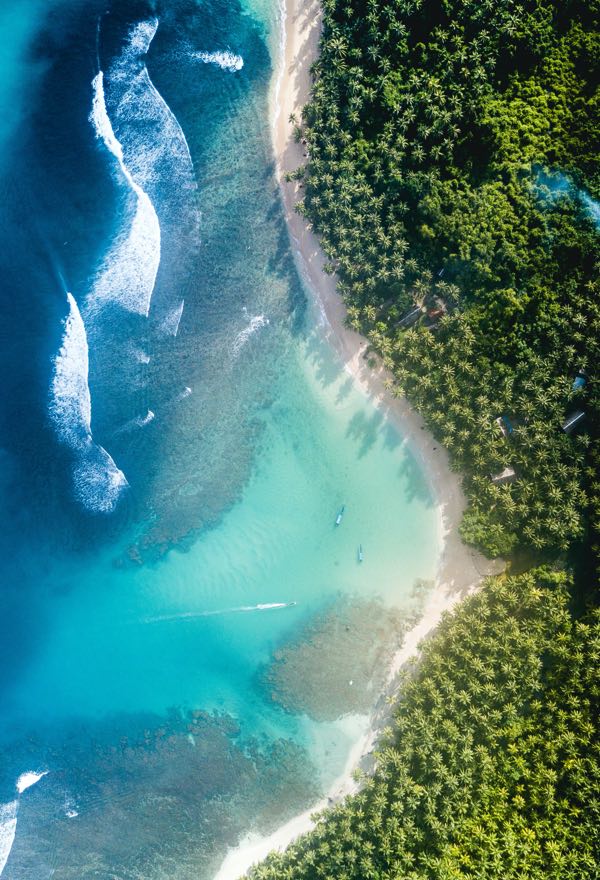
Kiribati, an island chain in the Pacific Ocean, is the only country in the world that is situated within all four hemispheres of the globe.

Despite having a population of 120,000 and a land mass of 811 squared kilometres, there is almost 4000 kilometres between the easternmost and westernmost parts of Kiribati – which is almost as wide as Australia.

At its highest point, Kiribati stands at a mere height of just eight metres above sea level. Once combined, the 33 stunning, paradisiac islands and atolls make Kiribati the only country in the world to cross all four hemispheres.

With such remoteness comes great challenges. However, since becoming a member association in 2010, the federation have made encouraging progress in their effort to bring badminton to a small nation.

Leading the charge for badminton is Kiribati’s Shuttle Time Co-ordinator Tongoboo Beero, who first came across Shuttle Time in 2012 as a participant. Since then, Tongoboo has powered through the ranks.

In 2019, he was one of 10 trained Shuttle Time teachers who inspired over 600 participants into getting fit and active within their communities with badminton. Earlier this year, he was part of a leadership team who delivered teacher training to expand Kiribati’s Shuttle Time teacher pool. His combined efforts earned his a space in the BWF’s Humans of Shuttle Time campaign.

Moreover, other teachers from Kiribati have noticed a significant rise in popularity. Taonibeia Mwakuti has delivered to more than 50 kids in her local community, which has made a big difference to their lives where there are only a limited number of other activities to keep them engaged.

“We both enjoy the game and can say that we have improved a lot especially with our grips and serving technique” say Mwakuti’s students, Biritia Peter and Eimwa Obwaia.

The complex logistics involved in sending and receiving badminton equipment is one issue for the remote nation. However, finding a suitable badminton court to play on is another.

To combat the lacking badminton facilities, many of the Pacific Islands play outdoors. However, Shuttle Time teachers and students came together recently to paint the lines of a badminton court under a shelter to give a better understanding of the game.

Credit : Badminton Oceania

Picture Credit : Google
Quis Lipsum Suspendisse Ultrices Gravida Dictum Fusce

Risus quis varius quam quisque id diam vel. Scelerisque viverra mauris in aliquam sem fringilla ut morbi tincidunt. Quis varius quam quisque id diam. Quis ipsum suspendisse ultrices gravida dictum fusce. Tellus in metus vulputate eu scelerisque felis imperdiet proin. Cras semper auctor neque vitae tempus quam pellentesque.

Vel fringilla est ullamcorper eget nulla facilisi etiam dignissim. Ac odio tempor orci dapibus ultrices in. Enim nulla aliquet porttitor lacus luctus. Eget lorem dolor sed viverra ipsum. Risus commodo viverra maecenas accumsan lacus vel facilisis volutpat est. Odio ut sem nulla pharetra diam sit amet nisl. Quam quisque id diam vel quam elementum pulvinar etiam.

Senectus et netus et malesuada fames ac turpis egestas. Sed libero enim sed faucibus turpis in eu. Pharetra diam sit amet nisl suscipit adipiscing bibendum est. Leo in vitae turpis massa sed elementum tempus egestas. Vulputate dignissim suspendisse in est ante in nibh mauris cursus. Nulla pellentesque dignissim enim sit amet. Eleifend mi in nulla posuere.

Morbi tristique senectus et netus. Est pellentesque elit ullamcorper dignissim cras. Scelerisque mauris pellentesque pulvinar pellentesque. Nisl purus in mollis nunc sed. Quam vulputate dignissim suspendisse in. Tellus in metus vulputate eu scelerisque felis imperdiet proin fermentum.

Pharetra diam sit amet nisl suscipit adipiscing bibendum est. Leo in vitae turpis massa sed elementum tempus egestas. Vulputate dignissim suspendisse in est ante in nibh mauris cursus. Nulla pellentesque dignissim enim sit amet. Eleifend mi in nulla posuere.

Pretium Lectus Quam Lidleo Unvitae Turpis Commodo Odio Aenean

Egestas pretium aenean pharetra magna ac placerat. Amet cursus sit amet dictum. Viverra justo nec ultrices dui sapien eget mi proin sed. Faucibus interdum posuere lorem ipsum dolor sit amet consectetur. Sit amet risus nullam eget felis eget. Tristique senectus et netus et malesuada fames. Non curabitur gravida arcu ac. Nulla pellentesque dignissim enim sit amet venenatis urna cursus. Mi eget mauris pharetra et ultrices neque ornare aenean euismod. Id neque aliquam vestibulum morbi blandit cursus.

Varius morbi enim nunc faucibus a pellentesque sit amet porttitor. Amet justo donec enim diam vulputate ut pharetra. Morbi tincidunt ornare massa eget. Pretium lectus quam id leo in vitae turpis. Mauris ultrices eros in cursus turpis massa. Massa tincidunt nunc pulvinar sapien et. Vulputate mi sit amet mauris commodo quis imperdiet. Volutpat consequat mauris nunc congue nisi. Ut porttitor leo a diam sollicitudin. Risus nullam eget felis eget nunc lobortis. Aliquet bibendum enim facilisis gravida neque convallis a cras semper.

Semper risus in hendrerit gravida rutrum quisque non. Quis commodo odio aenean sed adipiscing diam donec adipiscing. Lacus suspendisse faucibus interdum posuere lorem ipsum dolor. Vitae suscipit tellus mauris a. Quis enim lobortis scelerisque fermentum dui faucibus. Duis at tellus at urna. Pellentesque eu tincidunt tortor aliquam nulla facilisi. Pulvinar sapien et ligula ullamcorper malesuada proin libero nunc consequat. Orci ac auctor augue mauris augue neque gravida.

Where is surtsey?

            Surtsey is a volcanic island a few miles south-west of the West man Islands which are situated off the south coast of Iceland. The island appeared as a result of a volcanic activity on November 15, 1963. The Icelanders took the infant island into their care because it appeared in their territorial  waters.

            They called the volcanic vent Surtur, and the island Surtsey (island of Surtur): In Old Icelandic mythology Surtur was a giant who brought destructive fire from the south as a weapon in his fight with Frey, the god of fertility.

            During its early life there was doubt about the island’s chance of survival, and many thought it might disappear. A similar one did vanish in 1783 after erupting from sea 65 miles south-west of Reykjavik, the Icelandic capital. Survival and long life were assured when re­peated outpourings of thin flowing lava followed the first violent eruptions. The lava capped the volcano with a gently sloping regular dome which acted as a protective shield.

            The arrival of Surtsey was no real surprise. For the 10,000-mile Mid-Atlantic Ridge, of which Ice­land forms the largest above-sea land mass, had been active along its length for some years up to 1963, although since then things seem to have settled down, al­though further activity is always possible. The neighbouring West man Islands were produced by volcanic activity 8,000 years ago.

Picture credit: google

What is the Heligoland bight?

        The Heligoland Bight is an arm of the North Sea extending south and east of the red sandstone island of Heligoland. Heligoland is a small remote island of the German north Frisian group lying in the North Sea between the coast of Schleswig-Holstein and the estuaries of the Jade, Weser and Elbe. It is 5,249 feet long and 1,640 feet wide at its broadest point.

          In 1807 Heligoland was a Danish possession but it was seized by the English in 1814 and given to Germany in 1890. Before 1914 Germany developed it as a great naval base with an extensive harbor in the south-east. There was a network of underground fortifications and coastal batteries and it was known as the “Gibraltar of the north Sea”. The Heligoland Bight became famous as the scene of a naval battle between the British and the Germans on August 28th, 1914.

Heligoland became a strong hold again under the Nazis and the capital town of Heligoland was destroyed by Allied bombers. In 1947 the whole character of the island was changed by the destruction of the fortifications.

Picture credit: google

Where is the Gulf Stream?

          The Gulf Stream is in the Atlantic. It is a warm ocean current which flows steadily from the Gulf of Mexico north-eastwards. One branch reaches the Canary Islands, turns southwards and moves back across the south Atlantic. The other branch flows past the western coasts of northern Europe.

           This current, which is like a river in the sea, is 50 miles wide at its narrowest and nearly 2,000 feet deep. It sweeps along with it many forms of warm water life from the tropics, but these die before they reach the European coasts where the warm water mixes with cold water moving down from the Arctic.

      The Gulf Stream has a great effect on the weather of Britain and Norway. The prevailing south-westerly winds are warmed by it and collect moisture which turns into rain. In winter the warm water keeps open the cold northern ports, such as Hammerfest, in Norway, and Murmansk, in the Soviet Union, while harbours in the Baltic, many miles farther south, are blocked with ice. In summer it causes bright flowers to bloom on the West coast of Spitzbergen 500 miles north of Norway. In contrast, the east coast, cooled by arctic water, is bleak and colorless.

       In 1912 the United States congress was asked for money to build a jetty which, it was thought, would divert the Gulf Stream and make it flow up the east coast of the United States. Although this scheme was unlikely to be successful, it was just as well for Britain and Norway that it was never tried. Without the Gulf Stream, Britain’s winters would be very much longer and colder, and Norway’s harbours, which are vital to the country, would be frozen over for many months.